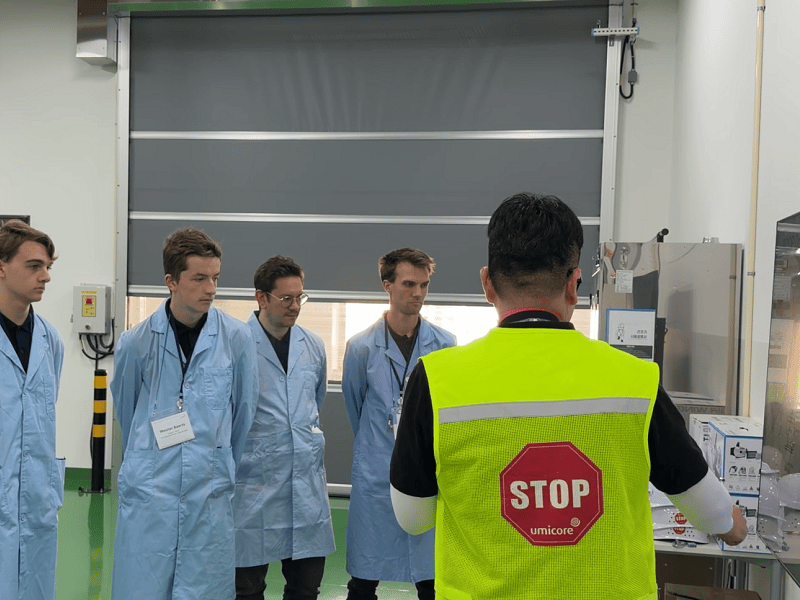
A science lesson can explain a battery. Stepping into a research lab lets you explore it up close, and meet the people developing the materials inside it. For a group of Belgian students, a visit to Umicore in Korea was a chance to ask questions, get hands-on and discover where an interest in science could lead.
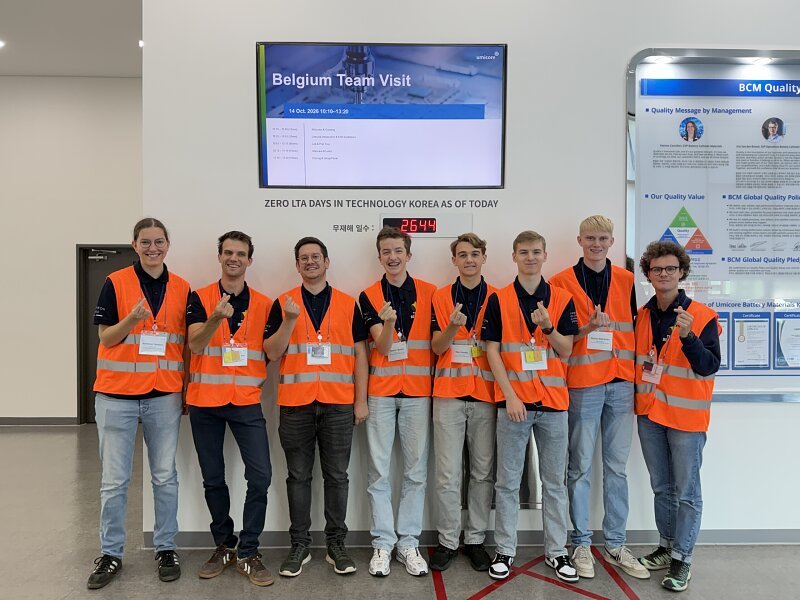
On October 14, we welcomed students from Sint-Martinusscholen Herk-de-Stad to Umicore Battery Materials Korea. They were in Korea to represent Belgium in the FIRST Global Challenge, an international robotics and science competition. Interested in batteries and electric vehicle technologies, they reached out to Umicore to ask for a visit.
Their goal? To learn more about lithium-ion battery cathode materials and see what happens inside a working research environment.
From classroom questions to real discoveries
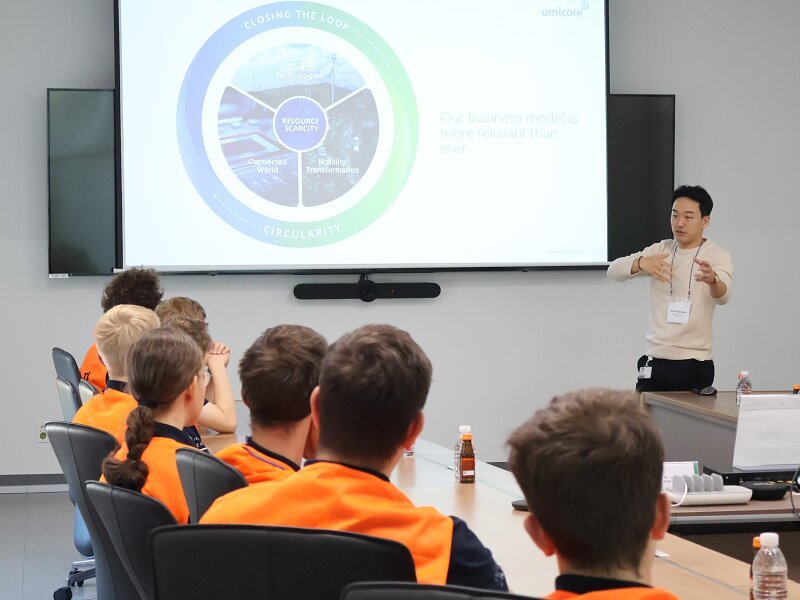
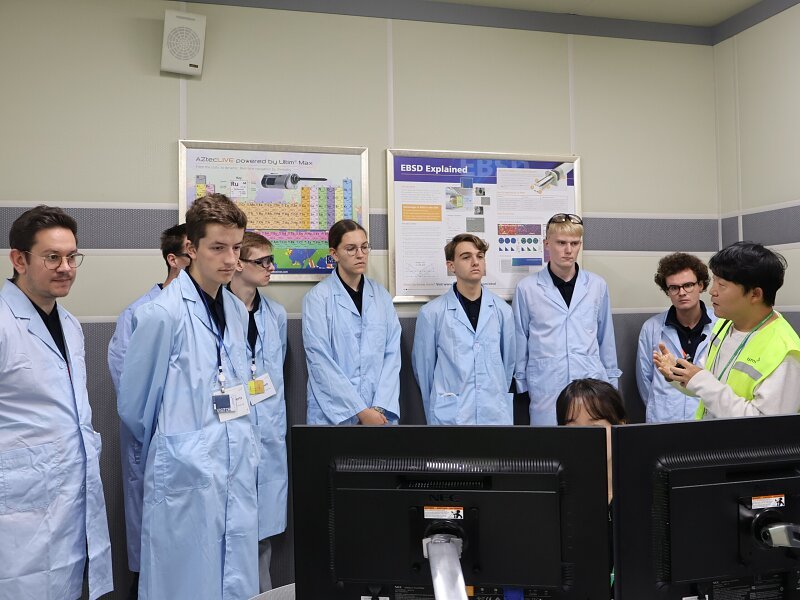
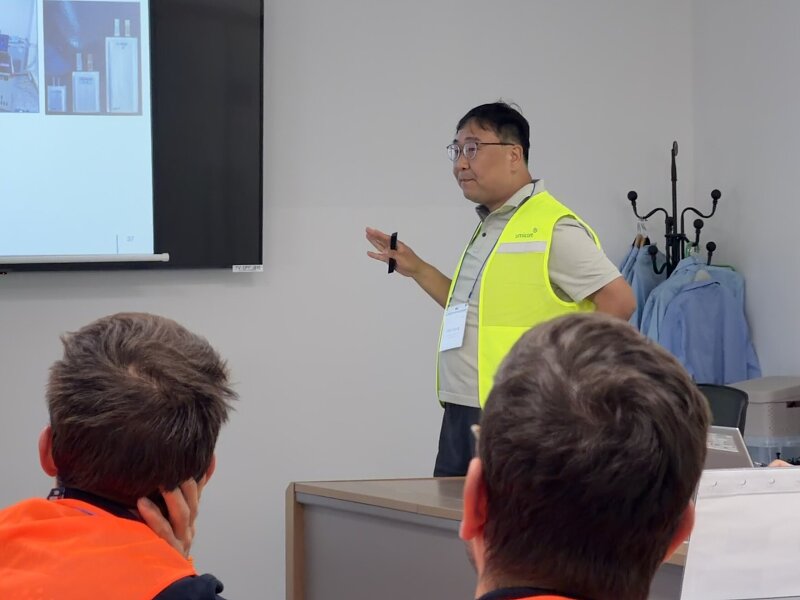
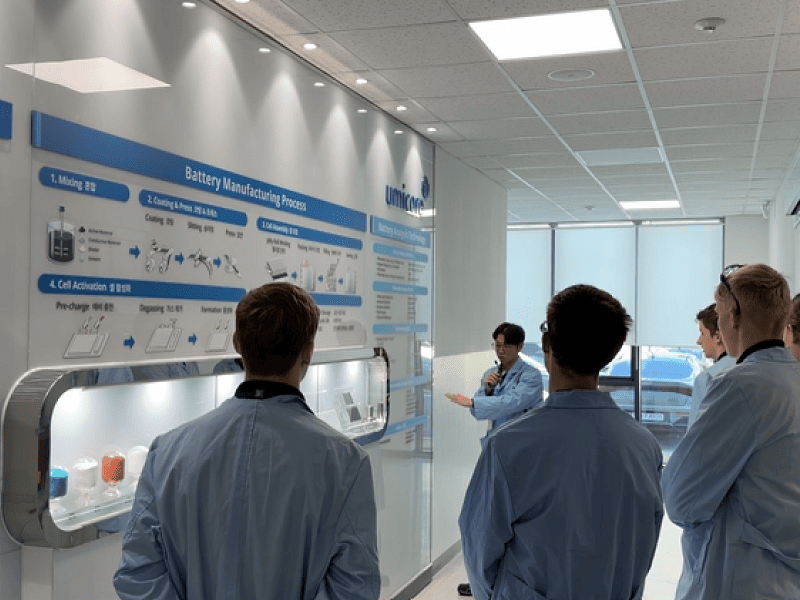
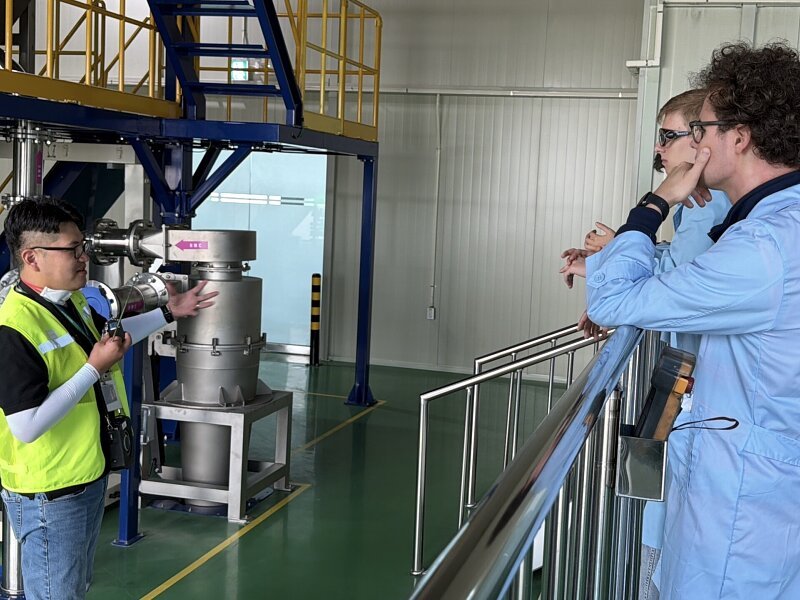
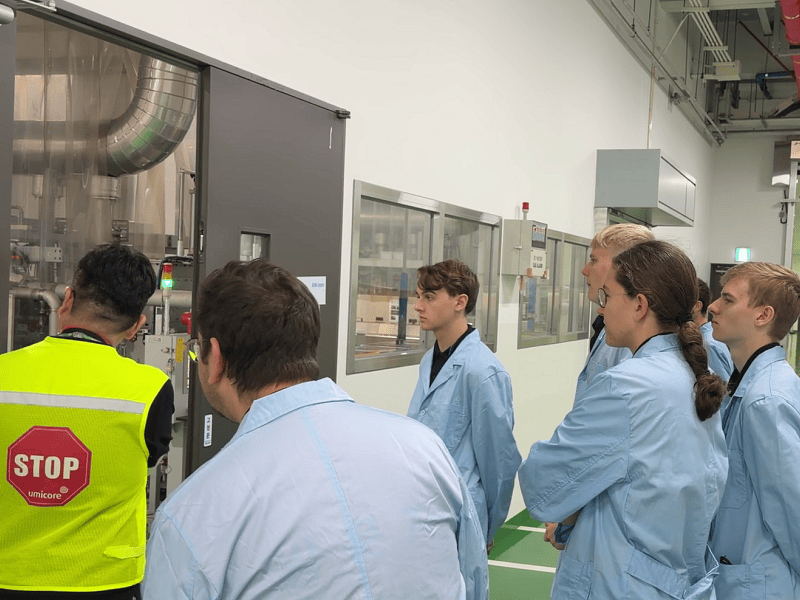
A tour of our research laboratories and pilot facilities brought the students closer to the science. Along the way, our researchers explained how battery materials progress from research and development towards production.
For student Abelone Tessens, seeing those stages connected was a highlight:
The facilities were very impressive. What stood out most was being able to see how batteries are developed and produced through different stages.
The visit offered a look beyond the finished battery, revealing the research, processes and people behind it.
Getting hands-on with battery science
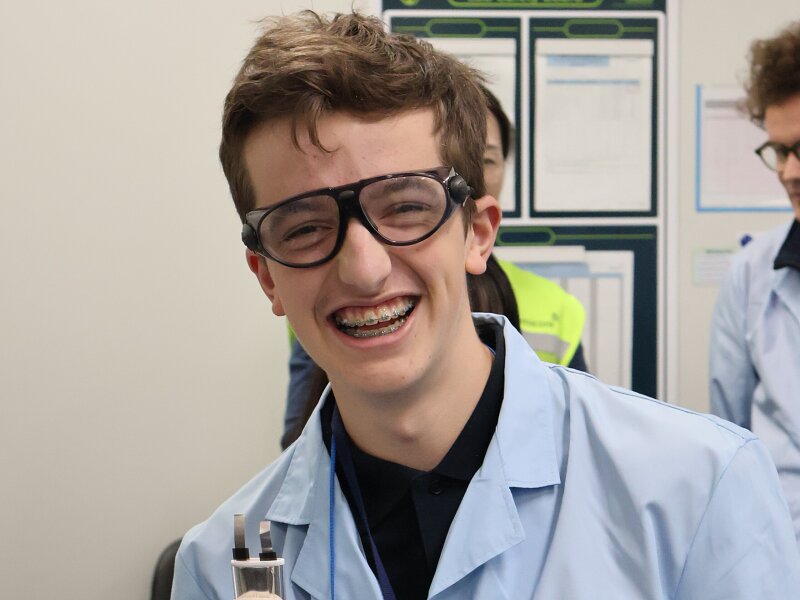
One discovery came with an unexpected name: the battery “jelly roll.” Students examined this component of a battery cell, with some trying part of the assembly process themselves. Battery structures they had studied in class were now something they could explore firsthand.
And the students were not the only ones making discoveries.
“I never realized how complex the battery manufacturing process is. It was very impressive and interesting to see how the concepts students learn in school are applied in an actual industrial setting,” said accompanying teacher Arno Wuyts.
Meeting the people behind the technology
Conversations with our researchers created space for questions and an exchange of ideas. Students also discovered how safety, innovation and sustainability are reflected in the facilities, processes and daily work of our teams.
For accompanying teacher Noud Bruyninx, this connection between school and industry made the experience particularly valuable:
It was fascinating for both the students and our team to see how concepts learned in the classroom are actually implemented in a real industrial environment.
The learning went both ways. Our researchers shared their expertise, while the students brought curiosity, enthusiasm and fresh perspectives.
For Umicore, that is the value of opening our doors: making science accessible and helping young people imagine where their interests could lead. For Team Belgium, it all started with asking to find out more.
You do not need to know exactly where an interest in science will take you. Curiosity is a good place to start.